



In Hochtemperaturindustrien wie der Glasherstellung, der Stahlproduktion, Zementwerken und der Petrochemie, sind Feuerfestmaterialien unerlässlich, um Anlagen zu schützen und eine stabile Produktion zu gewährleisten. Die Leistung eines Ofens oder einer Hochtemperaturanlage wird maßgeblich bestimmt durch Qualität und Zustand seiner feuerfesten Auskleidung.
Trotz ihrer Beständigkeit gegenüber extremen Temperaturen und chemischen Umgebungen sind Feuerfestmaterialien nicht vor Verschleiß und Degradation gefeit. Im Laufe der Zeit beeinträchtigen thermische Zyklen, chemische Korrosion, mechanische Beanspruchung und Betriebsbedingungen allmählich die Feuerfestleistung.
Aus diesem Grund ist die regelmäßige Feuerfest-Inspektion eine grundlegende Praxis der industriellen Ofenwartung.
Die Spezialisten der Beratungsdienstleistungen von MXS-Refractories beobachten häufig, dass Feuerfestversagen selten plötzlich auftritt. In den meisten Fällen zeigt die feuerfesten Auskleidung schon lange vor einem kritischen Versagen frühe Warnzeichen.
Die frühzeitige Erkennung dieser Signale ermöglicht es Unternehmen, Korrekturmaßnahmen zu ergreifen mittels Feuerfest-Inspektion, feuerfesttechnischer Analyse und Feuerfest-Wartungsplanung.
Nachfolgend finden Sie fünf zentrale Warnzeichen, die darauf hindeuten, dass Ihre feuerfeste Auskleidung möglicherweise eine sofortige Inspektion durch Feuerfestexperten benötigt.
1. Abnormaler Wärmeverlust am Ofenmantel
Einer der frühesten Indikatoren einer Degradation des Feuerfestmaterials ist ein Anstieg der Ofenmanteltemperatur.
Feuerfestauskleidungen wirken als Wärmedämmung, halten die Wärme im Ofen und schützen gleichzeitig die Stahlmantelkonstruktion. Wenn die Dicke des Feuerfestmaterials abnimmt aufgrund von Korrosion, Erosion oder strukturellen Schäden, nimmt der Wärmedurchgang zu.
Betreiber können Folgendes feststellen:
- ungewöhnliche heiße Stellen am Ofenmantel
- erhöhte Außenoberflächentemperatur
- höherer Energieverbrauch zur Aufrechterhaltung der Betriebstemperatur
- verringerte thermische Effizienz
Die thermografische Inspektion wird häufig eingesetzt im Rahmen von Inspektionsdienstleistungen für Feuerfestmaterialien , um diese Anomalien zu erkennen.
In vielen Fällen offenbaren diese heißen Stellen lokalisierten Feuerfestverschleiß, innere Risse oder strukturelles Versagen innerhalb der Auskleidung.
Das Ignorieren solcher Warnzeichen kann schwerwiegende Folgen haben, darunter Verformung des Mantels, strukturelle Schäden oder Notabschaltungen.
Eine proaktive Feuerfestinspektion durch Feuerfestspezialisten wie die Berater von MXS-Refractories hilft, diese Probleme zu erkennen, bevor sie eskalieren.
2. Risse in Feuerfestmaterialien
Risse sind in Feuerfestauskleidungen häufig, aber nicht alle Risse sind harmlos.
Manche Risse sind oberflächlich und entstehen auf natürliche Weise durch thermische Ausdehnung und Kontraktion während des Ofenbetriebs. Bestimmte Rissarten weisen jedoch auf strukturelle Probleme hin, die eine weitere Untersuchung erfordern.
Typische Rissursachen sind unter anderem:
- Thermoschock durch schnelle Temperaturwechsel
- mechanische Beanspruchung durch Ofenbewegungen
- unsachgemäße Installation des Feuerfestmaterials
- Dehnungsinkompatibilität zwischen Feuerfestmaterialien
- strukturelle Konstruktionsprobleme
Während einer refractory inspection, analysieren Experten die Rissmuster, um deren Ursprung zu bestimmen.
Zum Beispiel:
- vertikale Risse können auf strukturelle Spannungen hinweisen
- Netzrissbildung kann auf thermische Ermüdung hindeuten
- große offene Risse können zu einer Instabilität des Feuerfestmaterials führen
Unkontrolliert können sich Risse tiefer in die Feuerfeststruktur ausbreiten und die Integrität der Ofenauskleidung beeinträchtigen.
In Branchen wie Glasöfen, kann die Rissbildung des Feuerfestmaterials sogar beitragen zu Glasfehlern, Verunreinigungen oder Einschlüssen.
Eine professionelle feuerfesttechnische Bewertung durch die Beratungsexperten von MXS-Refractories hilft festzustellen, ob Risse akzeptabel sind oder eine sofortige Reparatur erfordern.
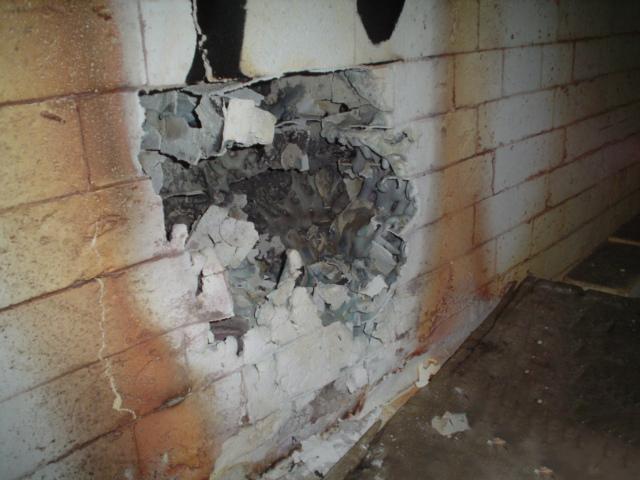
3. Abplatzungen am Feuerfestmaterial und Materialverlust
Abplatzung ist ein weiteres kritisches Anzeichen dafür, dass eine Feuerfestauskleidung eine Inspektion erfordert.
Abplatzungen treten auf, wenn sich Fragmente des Feuerfestmaterials von der Oberfläche der Auskleidung ablösen. Dieses Phänomen kann durch mehrere Faktoren verursacht werden.
Häufige Ursachen sind unter anderem:
- Thermoschock während der Aufheiz- oder Abkühlzyklen
- chemische Korrosion durch Schlacken oder schmelzflüssige Materialien
- innere Spannungen innerhalb der Feuerfeststrukturen
- schlechte Materialauswahl in der Feuerfestspezifikation
In Glasöfen können durch das Abplatzen von Feuerfestblöcken Partikel in die Glasschmelze gelangen, mit der Folge von Glasfehlern wie Steinen oder Einschlüssen.
In der Stahl- oder Zementindustrie kann das Abplatzen des Feuerfestmaterials die Ofenauskleidung zunehmend schwächen und darunterliegende Isolierschichten freilegen.
Im Laufe der Zeit führen wiederholte Abplatzungen zu einer erheblichen Verringerung der Feuerfestdicke, wodurch das Risiko eines schwerwiegenden Versagens steigt.
Eine Feuerfestinspektion durch die Spezialisten von MXS-Refractories bewertet:
- das Ausmaß der Abplatzungen
- die Mechanismen der Materialdegradation
- die Kompatibilität zwischen Feuerfestmaterialien und Prozessbedingungen
Diese Bewertungen unterstützen häufig die Optimierung der Feuerfestspezifikation und die Beschaffungsstrategie für Feuerfestmaterialien.
4. Veränderungen der Ofenleistung
Manchmal lässt sich der Zustand der Feuerfestmaterialien erkennen anhand von Veränderungen im Ofenbetrieb.
Betreiber können mehrere Betriebssymptome beobachten, die mit der Degradation des Feuerfestmaterials zusammenhängen.
Beispiele:
- erhöhter Brennstoffverbrauch
- instabile Temperaturverteilung
- unregelmäßige Flammenbilder
- verringerte Ofeneffizienz
- längere Aufheizzyklen
Diese Veränderungen deuten häufig hin auf Wärmeverluste oder Schäden am Feuerfestmaterial, die das thermische Verhalten beeinträchtigen.
Wenn beispielsweise die feuerfesten Isolierschichten degradieren, entweicht die Wärme schneller aus dem Ofen, sodass zusätzliche Energie erforderlich ist, um die Prozesstemperaturen aufrechtzuerhalten.
In der Glasherstellung kann sich die Degradation des Feuerfestmaterials auch auswirken auf die Temperaturhomogenität in der Glasschmelze, was zu Prozessinstabilität führt.
Dank feuerfesttechnischer Ingenieurexpertise, können die Berater von MXS-Refractories die Ofenleistung analysieren und Betriebsdaten mit dem Zustand des Feuerfestmaterials korrelieren.
Diese Art der Analyse hilft, verborgene Feuerfestprobleme zu identifizieren, die bei der Routinewartung möglicherweise nicht sofort sichtbar sind.
5. Prozesskontamination und Produktqualitätsprobleme
In vielen Branchen beeinträchtigt die Degradation des Feuerfestmaterials direkt die Produktqualität.
Dies ist besonders kritisch in der Glasherstellung, wo Feuerfestmaterialien in direktem Kontakt mit geschmolzenem Glas stehen.
Wenn sich Feuerfestmaterialien verschlechtern, können sie Partikel freisetzen oder chemisch mit der Schmelze reagieren.
Diese Reaktionen können Folgendes erzeugen:
- Steine
- Einschlüsse
- Blasen
- Oberflächenfehler
Solche Fehler können die Produktionsausbeute erheblich verringern und die Ausschussraten erhöhen.
Auch in anderen Hochtemperaturindustrien kann sich eine Kontamination durch Feuerfestmaterial auswirken auf die Metallreinheit, chemische Reaktionen oder die Prozessstabilität.
Aus diesem Grund die Inspektion des Feuerfestmaterials und die Qualitätskontrolle der Feuerfestlieferanten sind wesentliche Bestandteile der industriellen Qualitätssicherung.
Die Beratungsleistungen von MXS-Refractories umfassen häufig Lieferantenaudits, Feuerfestinspektionen und die Optimierung von Feuerfestspezifikationen , um sicherzustellen, dass die Materialien die geforderten Leistungsstandards erfüllen.
Durch die Kontrolle der Feuerfestqualität von der Lieferantenauswahl bis zum Ofenbetrieb, reduzieren Unternehmen das Risiko einer Produktkontamination und gewährleisten eine gleichbleibende Produktion.
Die Bedeutung der präventiven Feuerfestinspektion
Viele Industriebetreiber untersuchen Feuerfestprobleme erst, nachdem ein Ausfall aufgetreten ist.
Die effizienteste Strategie ist jedoch die präventive Feuerfestinspektion in Kombination mit fachkundiger Feuerfestberatung.
Regelmäßige Feuerfestbewertungen ermöglichen es Unternehmen:
- Degradation frühzeitig zu erkennen
- Wartungsstillstände effektiv zu planen
- die Ofenreise zu verlängern
- Kosten für Notreparaturen zu senken
- die Prozessstabilität zu verbessern
Mit Leistungen wie Feuerfestinspektion, Audits von Feuerfestlieferanten, Entwicklung von Feuerfestspezifikationen und Outsourcing-Verhandlungen, unterstützt MXS-Refractories Industrieunternehmen bei der Optimierung der Feuerfestleistung.
In Hochtemperaturindustrien sind Feuerfestmaterialien nicht nur passive Komponenten — sie sind kritische Elemente der Prozesszuverlässigkeit und der betrieblichen Effizienz.
Das frühzeitige Erkennen von Warnzeichen und schnelles Handeln mithilfe von professionelle Inspektionsdienstleistungen für Feuerfestmaterialien kann schwerwiegende Ausfälle verhindern und die langfristige Leistungsfähigkeit von Industrieöfen sicherstellen.