



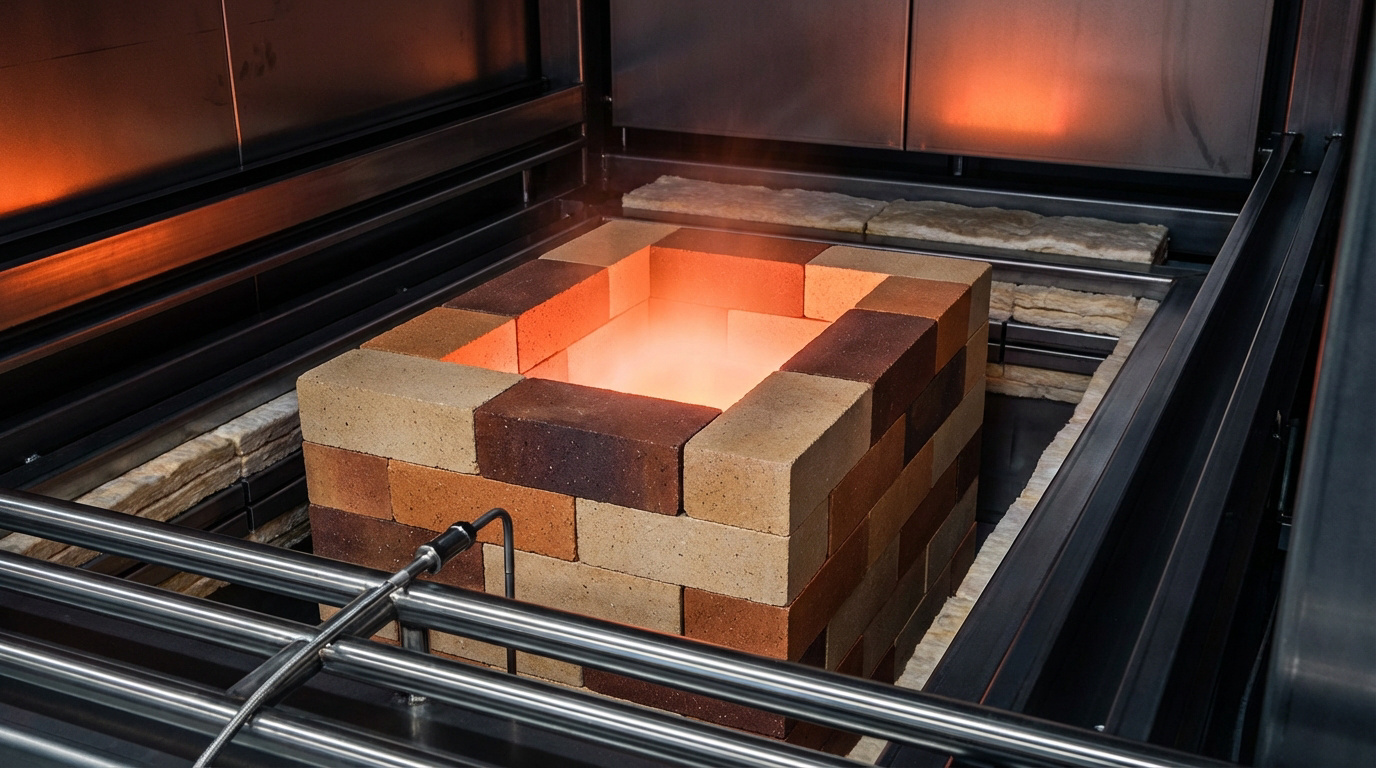
Key takeaway: industrial thermal performance rests on a rigorous trade-off between dense and insulating bricks based on the chemistry of the process environment. This strategic selection guarantees structural integrity up to 2,000 °C while optimizing energy efficiency. The critical point: tantalum-hafnium carbides make it possible to reach a record melting point of 4,215 °C.
Are your plants suffering costly production shutdowns caused by premature degradation of your thermal linings? This complete guide to industrial refractory materials gives you the expertise you need to arbitrate between dense bricks and insulating structures in order to optimize your energy efficiency. You will discover proven solutions for withstanding temperatures of 2,000 °C, along with the strict safety protocols surrounding biosoluble fibers.
- Technical fundamentals of industrial refractory materials
- Selection parameters for extreme thermal conditions
- Lining engineering and installation techniques
- Durability challenges and process thermal monitoring
Technical fundamentals of industrial refractory materials
Having set the scene on why thermal performance matters, let us turn to the concrete fundamentals that define the very structure of furnaces.
Trade-off between dense bricks and insulating structures
Density dictates the thermal conductivity of the material. Dense bricks transfer heat efficiently into the process, while porous structures slow that transfer to protect the outer shell.
On the robustness side, dense bricks withstand physical impact and abrasion. Insulating materials, by contrast, are more fragile and crumble under severe mechanical stress.
A precise audit makes it possible to define the ideal density-to-insulation ratio. See our refractory expertise services to refine your technical choices according to your operating constraints.
In short, compromise is unavoidable. Each thermal zone demands a specific material if it is to last.
Chemical classification and service temperature limits
Three families are distinguished: acidic, basic and neutral. A basic brick in contact with an acidic environment triggers a violent chemical reaction. Compatibility is therefore the first safety criterion.
Cetim, the French mechanical engineering technical center, details the diversity of refractory product families essential for handling slag and corrosive gases in foundry operations.
Mineral composition sets the thermal failure point. Beyond this threshold, the material slumps and loses its structural integrity under load.
Watch out for purity. Mineral impurities drastically lower the actual service temperature.
Selection parameters for extreme thermal conditions
Once the basic chemistry is understood, you must face the environments where the thermometer truly goes off the scale.
Solutions for applications reaching 2,000 °C
Alumina silicates reach their limits. Beyond 1,700 °C, these standard materials lose their structural integrity. They inevitably slump under their own weight.
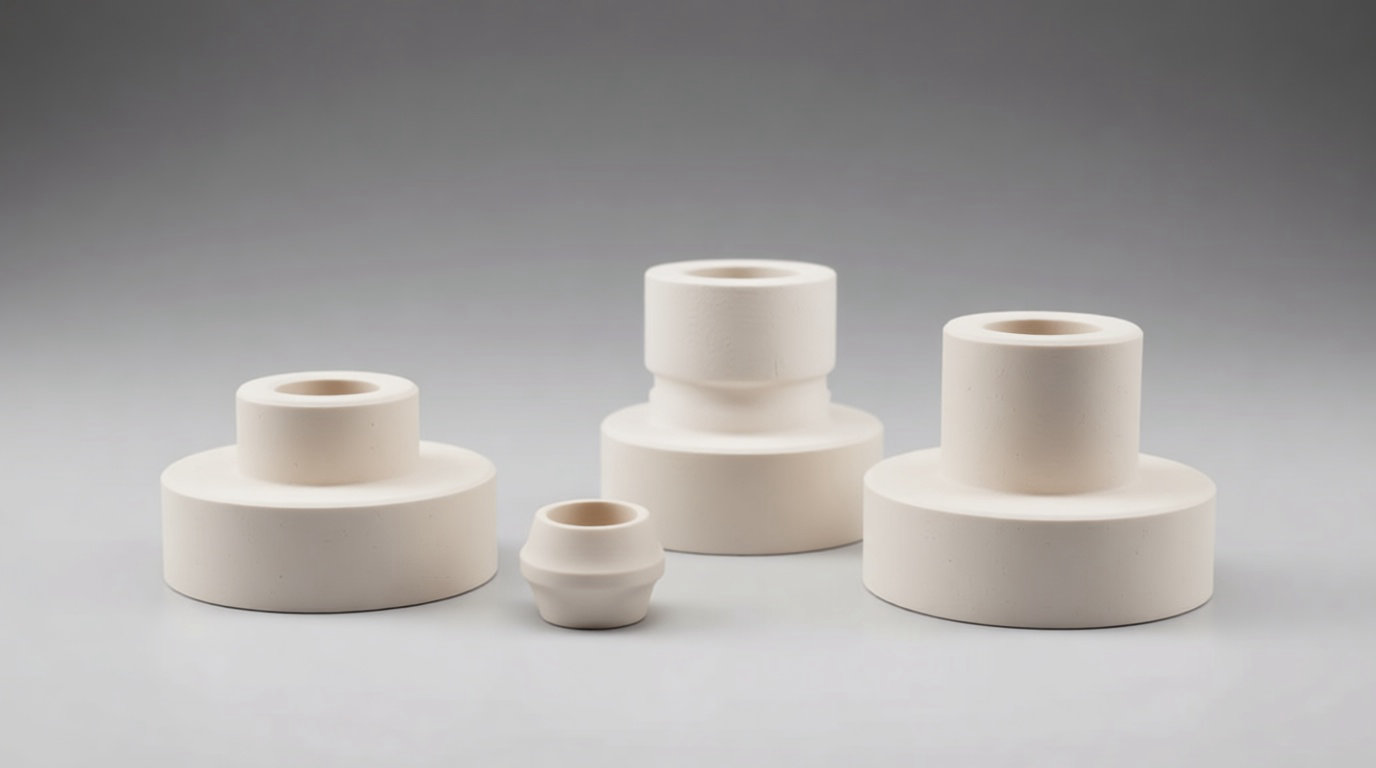
Technical ceramics then take over. Zirconia and silicon carbides deliver exceptional resistance. They maintain rigorous thermal stability at very high temperatures.
Der Société Européenne des Produits Réfractaires offers fused-cast solutions. These products guarantee optimal performance in these critical zones.
Stay alert. The high cost demands surgical precision in the selection process. There is no room for error.
Resistance to corrosive and reducing atmospheres
Industrial gases change the equation. Carbon monoxide and hydrogen disintegrate unsuitable bricks. Internal chemical reduction then destroys the structural bond.
Porosity becomes your worst enemy. Gases infiltrate deep into open pores. They attack the core of the material, causing invisible but fatal cracks.
Gas-tightness remains the ultimate defense. We recommend dedicated barriers or surface vitrification. This effectively blocks destructive gas exchange with the matrix.
Rigorous monitoring safeguards your operational durability. Anticipating wear preserves your strategic assets over the long term.
Lining engineering and installation techniques
The best material is worthless if it is poorly installed or poorly arranged within the furnace shell.
Designing multilayer systems for energy efficiency
The strategy relies on a rigorous layering approach. We place the dense refractory on the hot face for resistance. The insulation sits against the shell. This makes it possible to precisely optimize the overall temperature gradient.
Calculating the thermal gradient is decisive. Any lack of precision is risky. It can create a dew point that destroys the outer steel shell.
The impact on your energy bill is immediate. A well-designed multilayer structure pays for itself. It drastically reduces heat losses through the walls.
Stability is fundamental. The interaction between layers absorbs thermal expansion.
Ensuring gas-tightness and fixing accessories
Anchors play a major structural role. These metallic or ceramic components are indispensable. They hold castables in place despite repeated thermal cycling.
Cements and adhesives complete the system. They provide a robust chemical bond. Gas-tightness between precast blocks or bricks is thus guaranteed.
Doors are major critical points. Their sealing joints must be treated with care. This prevents heat leakage and cold spots.
Maintenance is vital. A broken accessory is dangerous. It can cause the collapse of a roof arch.
Durability challenges and process thermal monitoring
Beyond pure engineering, the future of the sector rests on worker health and data intelligence.
Occupational safety through biosoluble fibers
Going “BIO” is becoming a strategic priority. Replacing conventional ceramic fibers with biosoluble versions makes it possible to radically eliminate respiratory risks for your technical teams.
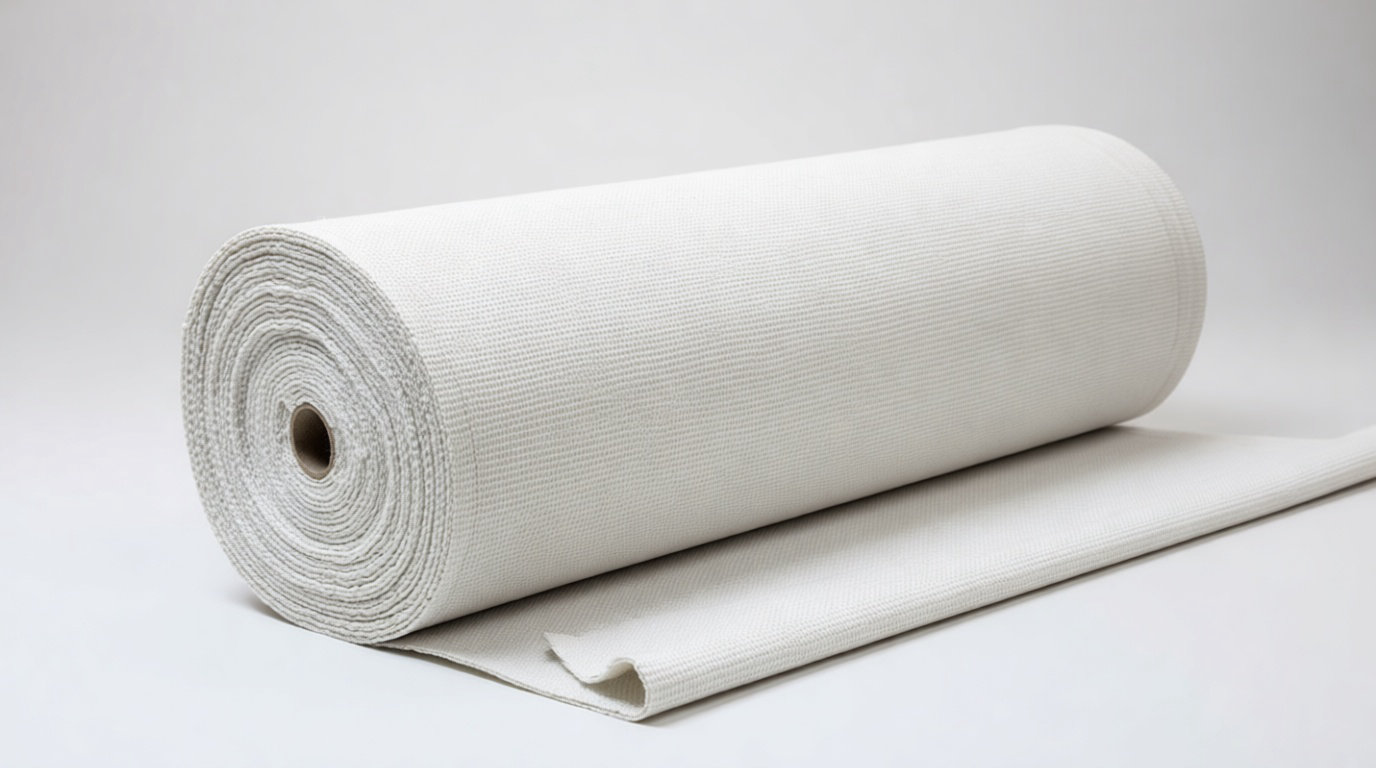
Performance does not suffer. These new fibers deliver equivalent thermal insulation while freeing you from the strict regulatory constraints attached to products classified as carcinogenic 1B.
Occupational health improves in concrete terms. Maintenance operators now work in a safe environment.
The environmental impact is also optimized. The end-of-life management of these materials proves far simpler.
Thermal monitoring and preventive maintenance
Embedded sensors are a game changer. Integrating thermocouples directly into the lining makes it possible to monitor actual wear without ever imposing an unnecessary production shutdown.
Precise analysis of the collected data is fundamental. Monitoring turns your maintenance into an exact science, driven by measurement of the system’s actual heat load.
This approach fits seamlessly into a plant-wide industrial digitalization strategy. Interconnected systems make every operational decision more reliable.
Anticipating failures finally becomes possible. You avoid costly shutdowns thanks to permanent visibility into the structural condition of your furnace walls.
Optimizing your installations requires a rigorous trade-off between mechanical density and thermal insulation. By mastering refractory material chemistry and preventive monitoring, you extend the life of your assets while cutting energy losses. Secure your future performance now with high-precision lining engineering.