


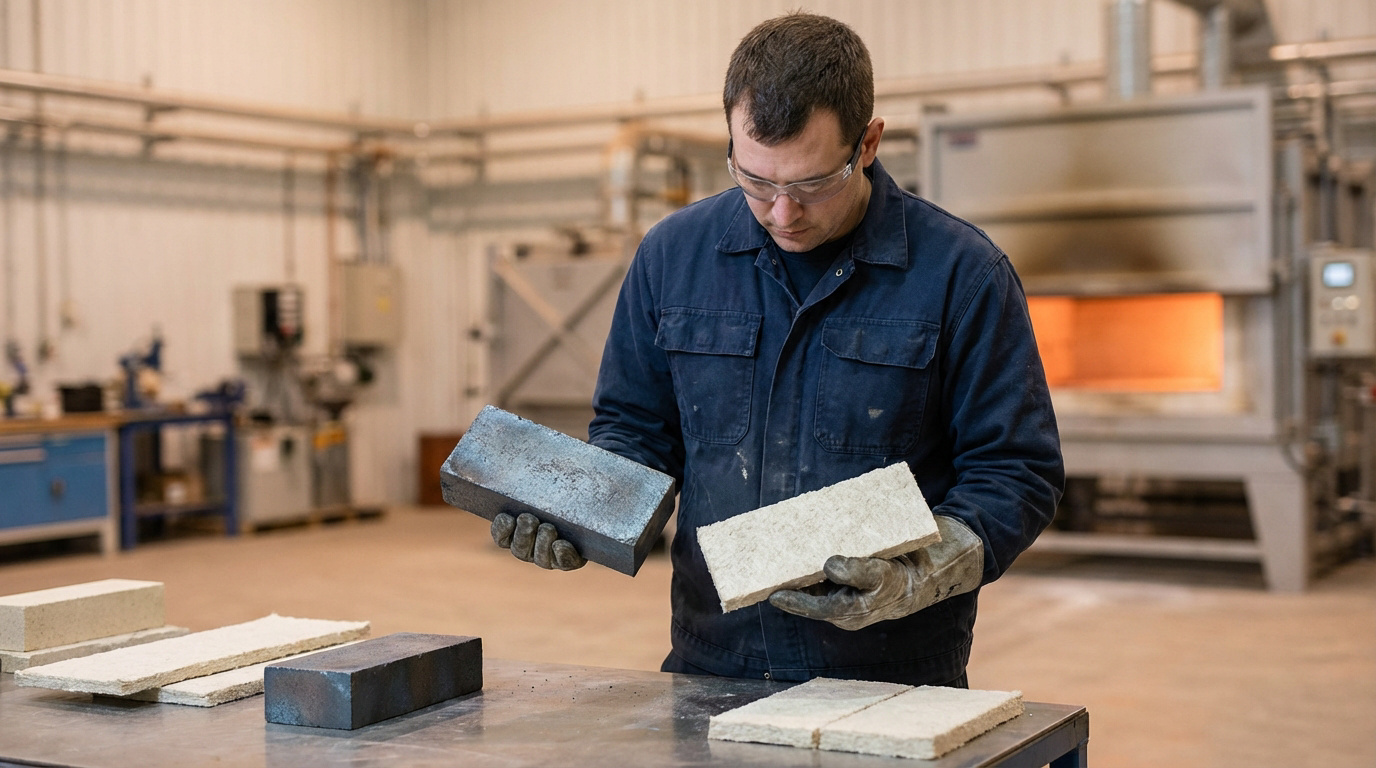
Key takeaway: selecting a refractory rests on a rigorous balance between thermal classification and chemical resistance. This approach guarantees the longevity of your installations against slag attack and temperature cycling. To secure your operations, always maintain a safety margin of 100°C between the actual service temperature and the material’s classification limit.
Are you suffering costly production shutdowns because of premature refractory brick failure? This technical guide details the rigorous selection parameters, from alumina content to structural density, to guarantee the integrity of your thermal installations. You will discover our methods for arbitrating between insulation and mechanical strength in order to optimise performance for the long term.
- Which technical criteria govern refractory selection for an industrial furnace?
- How to anticipate the chemical and mechanical stresses of the operating environment?
- Which configuration should you favour for greater energy efficiency?
- How to ensure lining longevity through maintenance?
Which technical criteria govern refractory selection for an industrial furnace?
Determining how to choose the right refractory for an industrial furnace is not a matter of chance, but of a rigorous analysis of the initial thermal parameters.
Thermal classification and service limits of the materials
Temperature thresholds depend directly on the alumina or silica content. Each material has a specific softening point. The physical structure deteriorates under the effect of heat.
We recommend a safety margin of 50 to 100°C. The classification temperature often exceeds the continuous working temperature. Consult the expertise of Refsas to precisely define your real operational requirements.
Always check the manufacturers’ technical data sheets. This precision prevents any premature failure.
Excessive heat irreversibly degrades the internal structure. A miscalculation condemns your lining.
Trade-off between structural density and insulating performance
The trade-off between conductivity and robustness is fundamental. A dense brick withstands mechanical loads better. On the other hand, its insulating capacity decreases in proportion to its density.
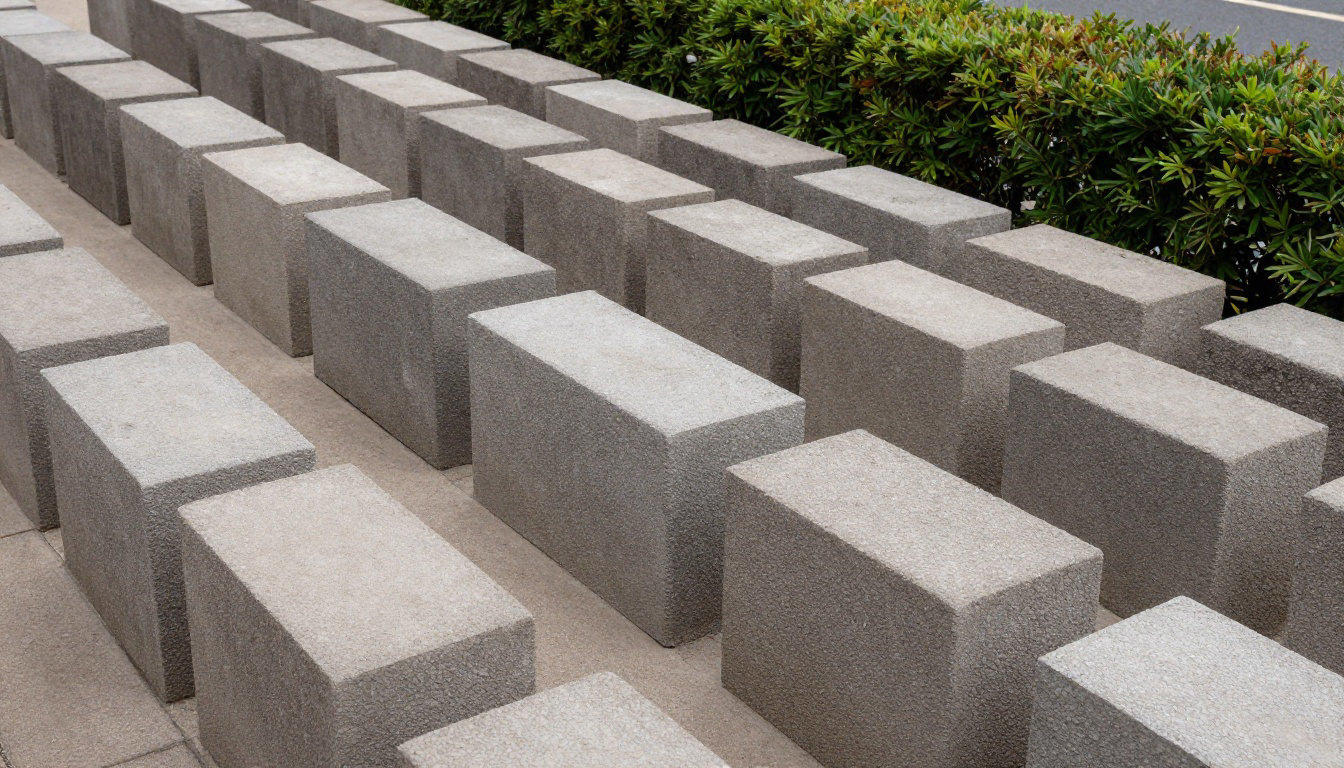
High density is favoured for furnace hearths. These zones bear heavy mechanical pressure.
Conversely, roofs and crowns call for lightweight materials. This reduces thermal inertia and eases installation.
You therefore have to arbitrate between dense or insulating refractories depending on the location.
How to anticipate the chemical and mechanical stresses of the operating environment?
The longevity of your installation does not depend on service temperature alone. The chemical interaction between the materials and the operating cycles defines the true service life of the lining.
Resistance to corrosion and aggressive atmospheres
It is imperative to identify the bricks suited to alkaline environments or molten metals. We recommend the use of basic materials, such as magnesia, to effectively neutralise corrosive slags.
The impact of oxidation cycles on porosity must be assessed rigorously. Oxygen alters the deep chemical structure of the material. This phenomenon degrades the physical properties of the refractory during service.
Experts favour spinel-based alumina-magnesia compounds. Their low chemical reactivity guarantees remarkable stability against attack.
Glass infiltration destroys the structural binder. Rigorous chemical protection therefore remains vital for your assets.
Structural stability against repeated thermal shocks
Resistance to rapid heating cycles is a decisive selection criterion. Sudden variations generate cracks through differential expansion. This spalling phenomenon threatens the integrity of refractory materials.
AZS bricks (Alumina-Zirconia-Silica) constitute a first-rate technical solution. They offer exceptional stability. Their use is recommended in zones subject to strong thermal turbulence.
Mullite stands out for its low thermal expansion. This mineral proves a valuable ally for your intermittently cycled furnaces.
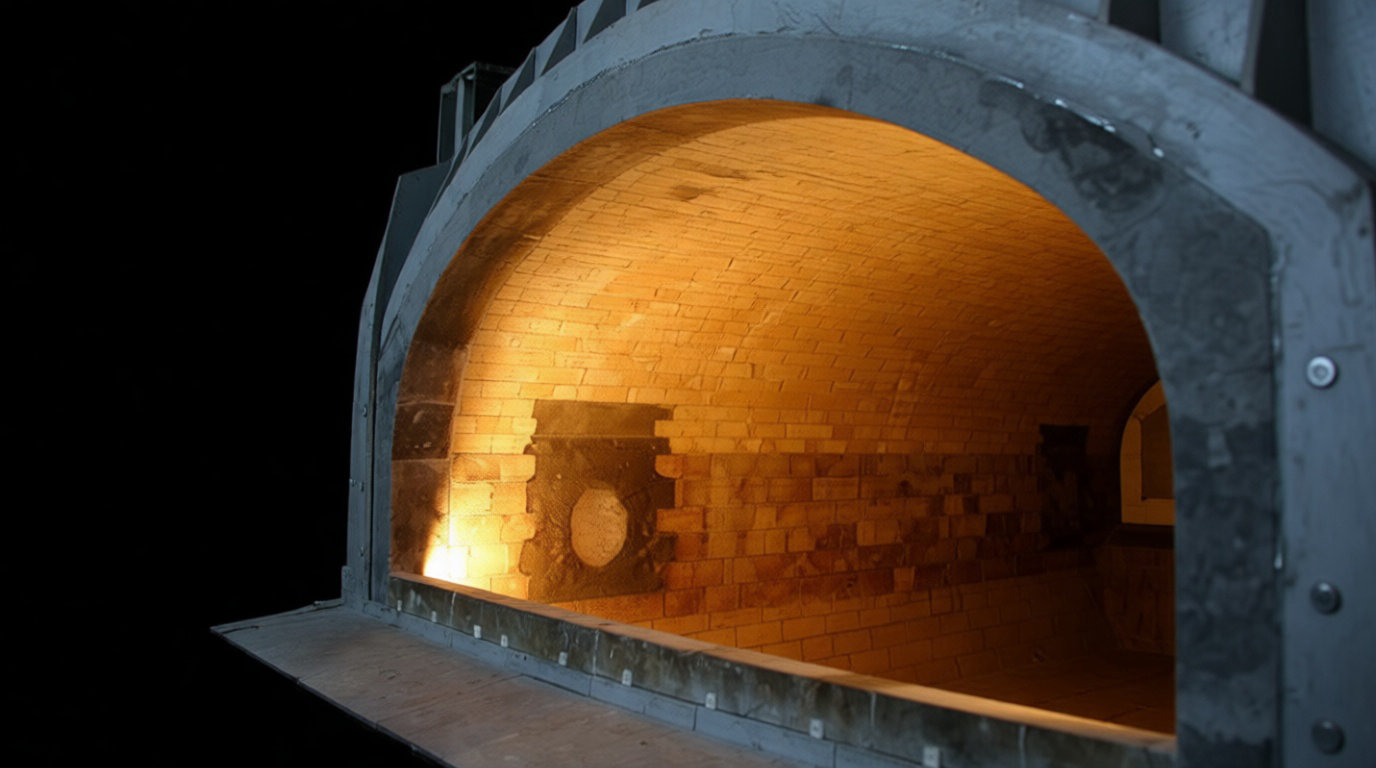
Which configuration should you favour for greater energy efficiency?
Moving from physical resistance to optimising operating costs through intelligent thermal insulation.
Layer sizing and calculating insulation thickness
The thermal calculation of the walls relies on the Magnus-Tetens formula. This method precisely determines the dew point. It thereby prevents condensation and corrosion of the shell.
Thickness directly influences fuel consumption. Adding a few centimetres of mineral wool drastically cuts the gas bill. It limits thermal losses through the external envelope.
A strategy of strategic industrial procurement promotes lasting energy profitability. We support your technical decisions.
Beware, however, of excess insulation. An oversized thickness risks overheating the metal framework. The balance remains an exact science.
Integrating biosoluble materials and sustainable solutions
Biosoluble fibres (AES) are an advantageous replacement for refractory ceramic fibres (RCF). They dissolve rapidly in biological fluids. Consult the recommendations of the INRS on the health risks associated with fibres.
Lightweight insulating silica bricks offer a high-performance alternative. Their SiO2 content exceeds 91%. They act as an effective barrier without the hazards of airborne dust.
These modern materials strengthen your environmental record. Sustainability has now become a major selection criterion. We favour these solutions for your industrial performance.
How to ensure lining longevity through maintenance?
We conclude the guide with operational follow-up, because even the best material wears out without monitoring.
Preventive maintenance protocols and quality certifications
Wear monitoring relies on precise thermal indicators. Infrared thermography identifies hot spots that can exceed 100°C. This method detects anomalies before any critical breakthrough of the lining.
Compliance with ISO standards ensures indispensable industrial rigour. Traceability of brick batches guarantees consistent performance. We thereby validate technical conformity over the entire campaign.
Regular monitoring makes it possible to anticipate major structural failures. You will quickly understand the importance of refractory inspection for safety. A proactive diagnosis extends the service life of your installations.
Selecting anchoring accessories and bonding products
Stainless steel anchors, such as AISI 310 or 330 grades, are fundamental. They hold castables and fibres in place despite strong thermal expansion. Without these mechanical fixings, the lining would risk immediate structural collapse. Their choice depends on the maximum target temperature.
The use of refractory mortars and cements is imperative for installation. These products ensure the complete sealing of expansion joints. They prevent corrosive gases from reaching and degrading the furnace’s metal shell. A perfect bond also limits mechanical erosion.
Chemical compatibility between the mortar and the brick must be total. A bad mix can cause unwanted localised melting. Knowing how to choose the right refractory for an industrial furnace necessarily includes these accessories.
Optimising thermal performance demands a rigorous trade-off between mechanical strength, inertia and chemical stability. By anticipating corrosion and thermal shock stresses, you guarantee the longevity of your installations. Select the right refractory material now to secure your profitability and turn your energy efficiency into a lasting competitive advantage.