



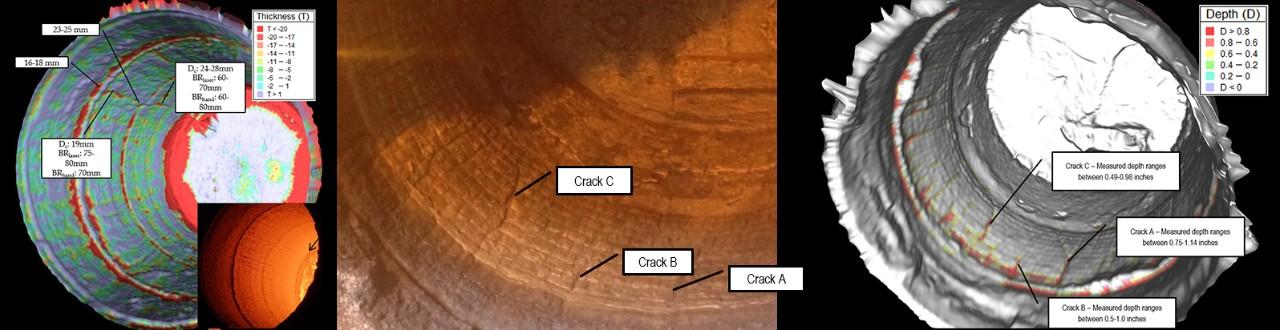
In high-temperature industries such as glass manufacturing, steel production, cement plants, and petrochemical processing, refractory materials are the invisible backbone of industrial furnaces. These specialized materials protect equipment from extreme temperatures, chemical attack, and mechanical stress.
Yet despite their critical role, refractory linings are often taken for granted until a failure occurs.
This is where refractory inspection becomes essential. Regular inspection of refractory systems allows companies to anticipate degradation, maintain process stability, and extend furnace lifetime. For companies operating high-temperature equipment, implementing a structured inspection strategy is one of the most effective ways to improve operational reliability.
The Critical Role of Refractories in Industrial Furnaces
Refractory materials are designed to withstand temperatures often exceeding 1500°C, while maintaining mechanical strength and chemical stability.
They are used in many types of industrial equipment, including:
- glass melting furnaces
- steel ladles and reheating furnaces
- cement kilns
- petrochemical reactors
- incinerators and thermal processing units
The main functions of refractory linings are:
- protecting the steel structure of the furnace
- maintaining thermal efficiency
- resisting corrosion from molten materials
- ensuring stable process conditions
However, even the best refractory materials degrade over time.
High temperatures, chemical reactions, thermal cycling, and mechanical loads gradually weaken the refractory structure. Without regular refractory inspection, these degradation mechanisms can progress unnoticed until they cause severe operational problems.
This is why companies increasingly rely on independent refractory inspection services such as those provided by MXS-Refractories to monitor furnace condition and anticipate maintenance needs.
Understanding Refractory Degradation Mechanisms
To appreciate the importance of inspection, it is necessary to understand how refractory materials deteriorate during operation.
Several mechanisms typically affect refractory linings.
Chemical corrosion
In many industrial processes, refractory materials are in contact with aggressive chemical environments.
Examples include:
- molten glass attacking furnace blocks
- slags reacting with refractory bricks in steel furnaces
- alkaline vapors affecting cement kiln linings
Over time, these reactions can dissolve or weaken the refractory material.
Thermal shock
Rapid temperature variations can generate internal stresses within refractory materials. When these stresses exceed the material’s resistance, cracks may form.
Thermal shock is particularly common during:
- furnace startup
- shutdown cycles
- sudden process disturbances
Mechanical wear
In certain areas of industrial equipment, refractory materials are exposed to abrasion caused by moving solids, flowing materials, or mechanical impact.
Structural fatigue
Repeated heating and cooling cycles gradually weaken the internal structure of refractory materials. This can eventually lead to spalling or material detachment.
Each of these degradation mechanisms can progressively reduce the effectiveness of the refractory lining.
Without systematic refractory inspection, early warning signs may remain undetected.
The Industrial Risks of Refractory Failure
A refractory failure rarely occurs without warning. However, when warning signs are missed, the consequences can be severe.
Common risks include:
Unexpected furnace shutdown
A major refractory failure may require immediate shutdown of the furnace to prevent structural damage. In industries such as glass or steel production, unplanned downtime can cost tens or even hundreds of thousands of euros per day.
Product contamination
In glass manufacturing, refractory degradation may release particles into the molten glass.
These inclusions can create defects such as:
- stones
- bubbles
- cords
This directly affects product quality and customer satisfaction.
Energy losses
Damaged refractory insulation increases heat losses, forcing furnaces to consume more fuel to maintain operating temperatures.
Safety hazards
Severe refractory damage can expose furnace shells to extreme heat, potentially causing structural failure or dangerous working conditions.
These risks highlight why professional refractory inspection services are essential for high-temperature industries.
What Does a Professional Refractory Inspection Include?
A professional refractory inspection conducted by specialists such as MXS-Refractories typically includes several technical evaluations.
Visual inspection
Engineers carefully examine accessible refractory surfaces to identify:
- cracks
- spalling zones
- corrosion areas
- installation defects
Visual inspection remains one of the most effective methods for detecting early damage.
Temperature analysis
Infrared thermography can detect abnormal temperature patterns on furnace shells.
Hot spots often indicate internal refractory damage or insulation failure.
Wear measurements
Engineers may measure the thickness of refractory materials in critical areas to evaluate wear rates.
This helps predict remaining lining lifetime.
Material evaluation
In some cases, refractory samples may be analyzed to understand degradation mechanisms.
This analysis helps optimize future refractory specifications.
Installation assessment
Improper installation can significantly reduce refractory performance.
Inspection may verify:
- expansion joints
- anchoring systems
- brick alignment
- casting quality
Through this systematic evaluation, refractory specialists can identify problems before they become critical.
How Refractory Inspection Improves Furnace Performance
Regular refractory inspection delivers several operational benefits.
Extended furnace campaign life
By detecting localized wear early, operators can perform targeted repairs instead of complete rebuilds.
This significantly extends furnace campaign duration.
Improved energy efficiency
Maintaining refractory integrity helps preserve insulation performance and reduce energy consumption.
Reduced maintenance costs
Preventive maintenance is always less expensive than emergency repairs.
Improved operational safety
Inspection programs reduce the risk of catastrophic refractory failures.
The Importance of Independent Refractory Expertise
One of the challenges in refractory management is maintaining objective technical evaluation.
Refractory suppliers may naturally promote their own products, which can sometimes influence technical decisions.
Independent experts such as MXS-Refractories provide unbiased technical assessments focused solely on performance and reliability.
Their expertise allows companies to:
- evaluate refractory suppliers objectively
- verify material quality
- optimize refractory specifications
- supervise refractory installations
This independent perspective is particularly valuable for complex furnace projects.
When Should a Refractory Inspection Be Performed?
A refractory inspection should ideally be integrated into the overall furnace maintenance strategy.
Typical inspection moments include:
- before furnace startup
- during scheduled shutdowns
- after abnormal operating events
- when unexpected temperature variations occur
- during long furnace campaigns
Regular monitoring allows engineers to track refractory wear and anticipate maintenance needs.
Companies that rely on periodic refractory inspection services from MXS-Refractories often achieve significantly longer furnace lifetimes.
Refractory Inspection as a Strategic Maintenance Tool
In modern industrial environments, maintenance strategies are increasingly shifting from reactive repairs to predictive maintenance.
Refractory inspection plays a key role in this transformation.
By combining field observations with technical expertise, engineers can better understand how refractory materials behave under real operating conditions.
This knowledge allows companies to:
- optimize furnace design
- improve refractory specifications
- select better suppliers
- reduce operational risks
For industries operating high-temperature equipment, refractory inspection is no longer just a maintenance activity.
It is a strategic tool for improving industrial performance.
Conclusion
Industrial furnaces operate under some of the most extreme conditions encountered in manufacturing. The refractory materials protecting these systems are constantly exposed to heat, chemical attack, and mechanical stress.
Without regular monitoring, refractory degradation can lead to severe operational problems, safety risks, and costly downtime.
Implementing a structured Regular refractory inspection is essential to prevent furnace failure, reduce downtime, and improve reliability. Discover how MXS-Refractories supports industrial performance. program with experts such as MXS-Refractories allows companies to detect problems early, optimize maintenance strategies, and extend furnace lifetime.
In high-temperature industries, proactive refractory management is not just good practice it is a key factor in achieving long-term operational reliability and industrial efficiency.