



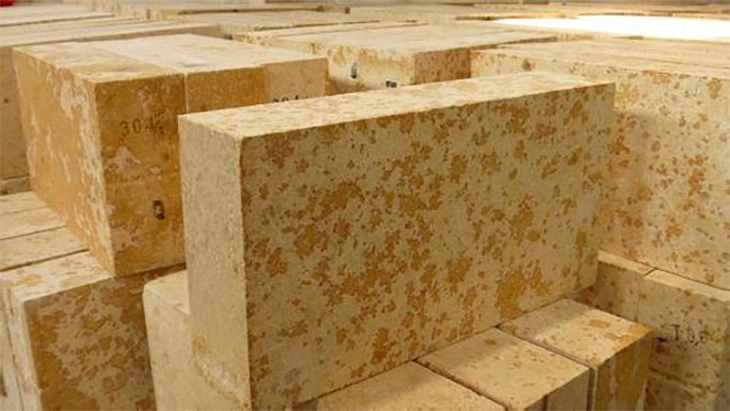
In high-temperature process industries, the choice of refractory materials directly impacts operational reliability, energy efficiency, product quality, and maintenance costs. Among the wide family of refractories available on the market, silica refractories occupy a unique and highly valuable position. Their thermal behavior, specific phase transformations, and excellent resistance to acidic slags make them indispensable in certain segments such as glass manufacturing, coke ovens, ceramic kilns, and various thermal-processing equipment.
Although aluminosilicates, AZS, and high-alumina refractories attract significant attention due to their versatility, silica refractories remain a strategic solution for applications where dimensional stability at high temperatures and excellent creep resistance are essential design requirements. This article reviews the fundamental characteristics of silica refractories, their typical industrial uses, and the operational advantages they provide to manufacturers seeking stable and cost-efficient high-temperature performance.
Understanding Silica Refractories
Silica refractories are materials containing over 93 percent silicon dioxide (SiO₂). Their performance is rooted in the mineral composition of the raw materials, primarily quartzite, and the unique phase transformations of silica. During controlled firing, quartz transforms into tridymite and cristobalite—high-temperature polymorphs that impart high melting points and structural stability.
The key properties of silica refractories include:
1. High Softening Point Under Load (RUL)
Silica products exhibit outstanding resistance to deformation under high temperature and heavy load. Their RUL values typically exceed 1650°C, ensuring structural integrity in furnace roofs, crowns, and other areas prone to mechanical stress.
2. Excellent Creep Resistance
The tridymite-cristobalite matrix provides exceptional creep resistance, allowing silica refractories to maintain shape and dimensions over long operating cycles, even when exposed to cyclic thermal loads.
3. Low Thermal Expansion in the Operating Range
Although silica undergoes significant expansion during initial heating, its thermal expansion curve becomes stable at operating temperatures between 800°C and 1600°C. This results in minimal dimensional change during continuous service, reducing mechanical stress on the structure.
4. High Resistance to Acidic Slags
Silica refractories perform exceptionally well in acidic environments where basic refractories would react unfavorably. This corrosion resistance is one of the reasons silica remains the preferred choice for coke-oven walls and glass-melting crowns.
5. Thermal Shock Considerations
While silica refractories offer many advantages, they are not suitable for applications involving severe thermal shock. Their behavior during rapid heating and cooling requires controlled start-up procedures and stable operating temperatures.
Manufacturing and Quality Factors
Producing stable and high-performance silica refractories requires strict control of raw materials and firing processes. Key manufacturing considerations include:
-
Purity and grain size distribution of quartzite to ensure proper phase transformation and predictable thermal expansion.
-
Additive management, such as mineralizers, to enhance conversion to tridymite and cristobalite.
-
Firing temperature and soaking time, which directly influence the final crystalline phases and mechanical strength.
-
Dimensional precision, which is essential for refractory linings requiring tight tolerances, such as coke-oven walls.
The complexity of the transformation cycle is such that even minor deviations can lead to premature cracking or inconsistent performance. For industrial users, sourcing from manufacturers demonstrating robust quality-control capabilities is therefore critical.
Key Industrial Applications
Silica refractories are used in industries where high temperatures, acidic conditions, and long operating campaigns define the production environment.
1. Glass Manufacturing
Silica refractories play a central role in the glass industry. They are used in:
-
Melting-furnace crowns
-
Superstructure components
-
Hot repairs of crown blocks
Their low thermal expansion at high temperature minimizes the risk of deformation, contributing to the long campaign life expected in glass furnaces.
2. Coke Ovens
Coke-oven chambers are one of the largest consumers of silica refractories. These applications require materials capable of withstanding:
-
Continuous operation above 1200°C
-
Repeated heating and cooling cycles
-
High mechanical loads from charging and coke pushing
Silica’s ability to become more stable as temperature increases makes it ideal for these demanding conditions.
3. Ceramic and Brick Kilns
Kiln roofs and arches benefit from silica’s high RUL and creep resistance. The material’s stability ensures consistent furnace geometry, which is essential for uniform heat distribution and product quality.
4. Hot Blast Stoves and Regenerators
Silica checker bricks are widely used in regenerators due to their high operating-temperature capability. Their performance enhances heat recovery efficiency and helps optimize overall furnace energy consumption.
Operational Advantages for Industrial Users
Investing in silica refractories can yield significant long-term benefits when systems are properly designed and operated.
1. Extended Campaign Life
With appropriate installation and controlled thermal cycles, silica refractories deliver excellent durability, reducing the frequency of major repairs.
2. Stability of Furnace Geometry
Their dimensional stability at high temperature helps maintain consistent thermal profiles and combustion environments, directly impacting product quality.
3. Reduced Downtime and Maintenance Costs
Because silica refractories resist creep and corrosion, maintenance intervals are extended, contributing to improved productivity and lower total cost of ownership.
4. Energy Efficiency
Stable superstructures and crowns reduce heat losses and support optimized heat transfer within the furnace, improving efficiency.
Considerations for Selecting Silica Refractories
Choosing the right silica product requires an understanding of operating conditions and mechanical constraints. Key selection criteria include:
-
Operating temperature and expected thermal cycles
-
Mechanical loads and structural design
-
Exposure to acidic vs. basic slags
-
Required dimensional tolerances
-
Expected campaign length and maintenance constraints
Partnering with suppliers that provide engineering guidance, thermal modeling, and technical support is an important factor in achieving optimal performance.
Conclusion
Silica refractories remain a highly strategic choice for industries requiring long-term stability, resistance to acidic environments, and consistent performance at elevated temperatures. Despite the growing diversity of refractory technologies, silica continues to deliver unmatched value in specific segments such as glass manufacturing, coke production, and ceramic firing.
In an environment where operational efficiency and reliability are critical, understanding the properties and advantages of silica refractories allows manufacturers to make sound decisions that support both performance and cost optimization. For organizations engaged in improving high-temperature processes, silica refractories should remain an essential part of the engineering and procurement strategy.