



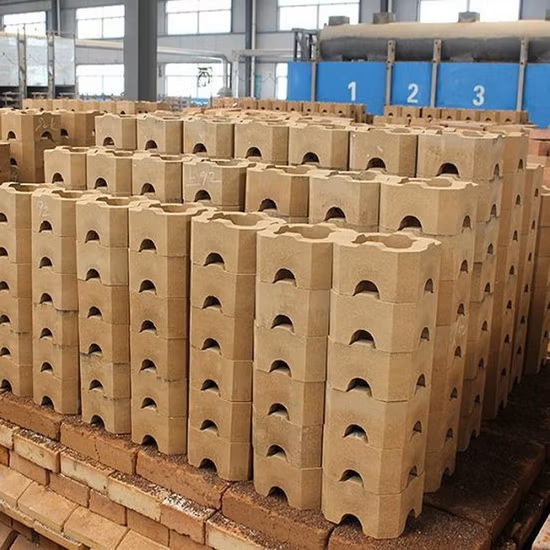
In high-temperature industrial processes, refractory materials play a critical role in ensuring operational stability, energy efficiency, and asset longevity. Among the main refractory families, basic refractories are specifically designed to withstand aggressive chemical environments, particularly those rich in alkaline compounds. Their correct selection and application are essential in industries such as steelmaking, non-ferrous metallurgy, cement, glass, and waste incineration.
This article provides an overview of basic refractories, focusing on their composition, key properties, typical applications, and important criteria for material selection.
What Are Basic Refractories?
Basic refractories are refractory materials whose chemical composition is predominantly alkaline. Their primary characteristic is a high resistance to basic slags and fluxes, such as those containing lime (CaO), magnesia (MgO), or iron oxides.
The most common basic refractory materials include:
-
Magnesia (MgO)
-
Doloma (CaO–MgO)
-
Magnesia-carbon (MgO-C)
-
Magnesia-chrome (MgO-Cr₂O₃)
These materials are widely used in environments where acidic refractories would rapidly degrade due to chemical incompatibility.
Chemical and Mineralogical Composition
The performance of basic refractories is largely driven by their chemical purity and mineralogical structure.
-
Magnesia-based refractories are characterized by a high MgO content, often exceeding 90%, providing excellent resistance to alkaline slags and high temperatures.
-
Doloma refractories combine calcium oxide and magnesium oxide, offering strong slag resistance but requiring careful handling due to hydration sensitivity.
-
Carbon-containing grades improve thermal shock resistance and reduce slag penetration, particularly in steelmaking vessels.
The quality of raw materials, grain size distribution, and bonding system (sintered, fused, or chemically bonded) all significantly influence final product performance.
Key properties of Basic refractories
Basic refractories are selected not only for their chemical compatibility but also for a combination of critical physical and thermo-mechanical properties:
1. Chemical Resistance
Their primary advantage is excellent resistance to basic slags, metal oxides, and alkaline vapors. This makes them ideal for steel and non-ferrous metallurgical processes.
2. High Temperature Stability
Basic refractories typically exhibit high refractoriness under load (RUL), allowing them to maintain structural integrity at temperatures above 1,600°C, depending on the grade.
3. Mechanical Strength
High cold crushing strength and good hot mechanical behavior are essential to withstand mechanical stresses, abrasion, and furnace movement during operation.
4. Thermal Shock Resistance
While pure magnesia can be sensitive to thermal shock, optimized formulations—especially carbon-bonded grades—offer improved resistance to rapid temperature fluctuations.
5. Slag Penetration Resistance
Low porosity and controlled microstructure help limit slag infiltration, reducing chemical wear and extending lining life.
Typical industrial applications
Basic refractories are widely used in processes where alkaline slags or aggressive chemical conditions are present.
Steel Industry
This remains the largest application field for basic refractories, including:
-
Electric Arc Furnaces (EAF)
-
Basic Oxygen Furnaces (BOF)
-
Ladles and tundishes
-
RH degassers and secondary metallurgy units
Magnesia-carbon bricks are particularly common due to their excellent balance between chemical resistance and thermal shock performance.
Non-Ferrous Metallurgy
Copper, nickel, and lead smelting operations often rely on magnesia-based refractories to resist chemically aggressive slags and high operating temperatures.
Cement and Lime Industry
Rotary kilns, burning zones, and transition zones frequently use magnesia-based or doloma refractories to withstand alkali attack and clinker abrasion.
Glass and Waste Incineration
In specific zones exposed to alkaline vapors or corrosive ashes, basic refractories provide enhanced chemical durability compared to acidic alternatives.
Key selection criteria
Selecting the right basic refractory solution requires a detailed understanding of the operating environment. Key parameters to consider include:
-
Slag chemistry (basicity, FeO content, aggressiveness)
-
Operating temperature and thermal cycling
-
Mechanical load and abrasion
-
Atmosphere (oxidizing or reducing)
-
Maintenance strategy and expected campaign length
A mismatch between refractory chemistry and process conditions can lead to premature wear, increased downtime, and higher total cost of ownership.
Quality control and supplier expertise
Given the critical role of basic refractories, quality control throughout the supply chain is essential. This includes:
-
Raw material qualification
-
Process control during manufacturing
-
Dimensional accuracy and consistency
-
Physical and chemical testing before shipment
Supplier expertise, technical support, and the ability to adapt formulations to specific process constraints are decisive factors for long-term performance.
Conclusion
Basic refractories are indispensable materials for high-temperature industrial applications involving alkaline environments. Their performance depends on a complex interaction between chemical composition, physical properties, and operating conditions.
A thorough understanding of process requirements, combined with carefully selected refractory solutions, allows industrial operators to optimize furnace performance, extend lining life, and reduce overall operating costs.
For industries facing increasingly demanding operating conditions, well-engineered basic refractory solutions remain a cornerstone of safe, efficient, and sustainable production.